
Golf Tournament Formats and Betting: How Strokeplay, Stableford and Match Play Change the Odds
 Available in US
When I first started betting on the DP World Tour seriously, I backed a player in a tournament I thought was standard strokeplay, watched him blow up on the final nine with three double bogeys, and assumed my bet was dead. It wasn’t — the event used a modified Stableford format, and those doubles cost him fewer points than they would have cost him in net strokes. My bet survived, barely, and I spent the following evening actually understanding what I’d been betting on. Tournament format is not a footnote. It changes the mathematics of everything.
Strokeplay: The Baseline Format in Professional Golf
The vast majority of professional tournaments use strokeplay, where cumulative strokes across all four rounds determine the winner. Every shot counts equally whether it’s a par on the first hole or a crucial putt on the 72nd. This is the format for which Strokes Gained analysis was developed, and it’s the one that makes traditional SG-based betting analysis most directly applicable.
The relevant betting implications of strokeplay: variance in a single round can be devastating or miraculous, but it reverses toward the mean over four rounds. A player who shoots 77 in round one in difficult conditions is not necessarily out of contention — if the course is playing hard for everyone, the leader after round one may be only two or three shots ahead. The cut mechanism in strokeplay eliminates the bottom half of the field after round two, concentrating the weekend on the most consistent performers.
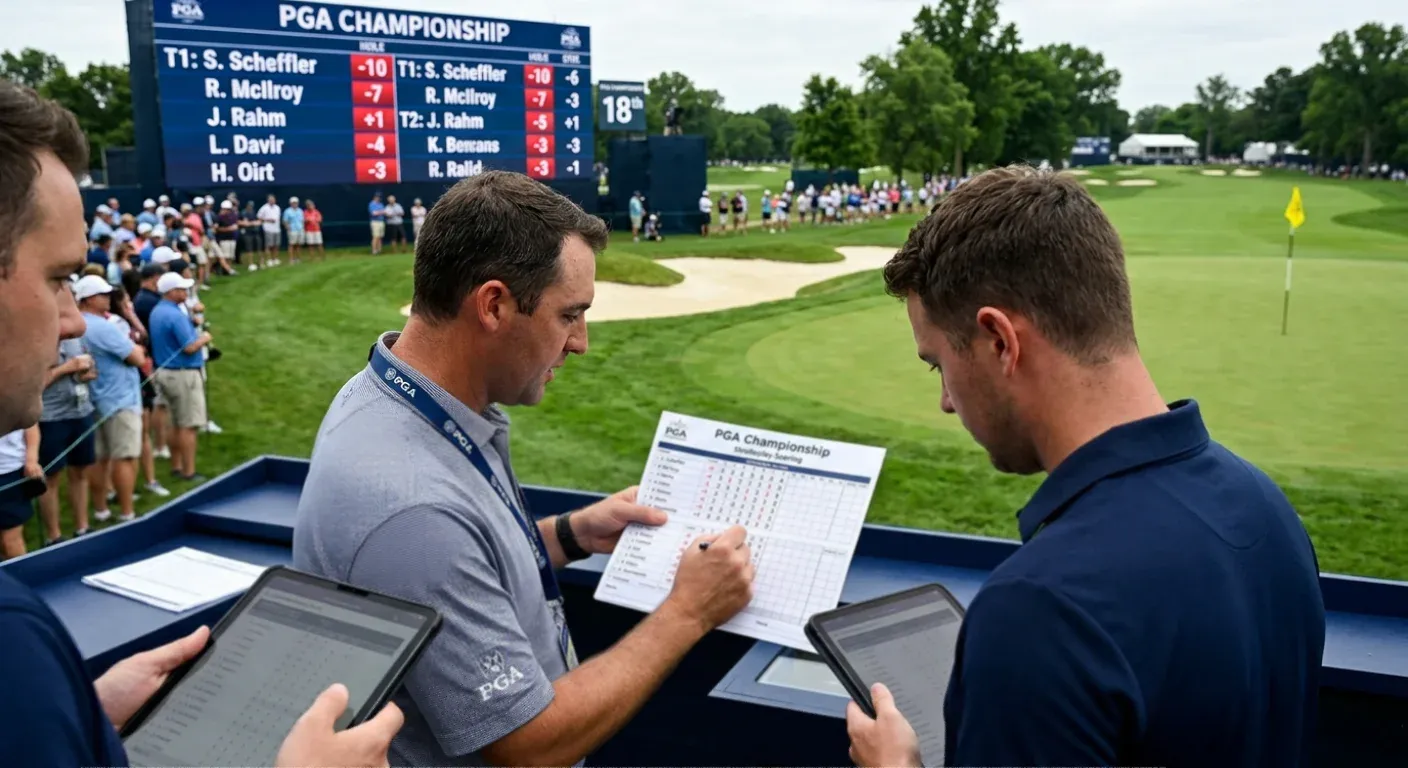
DataGolf’s analysis of 2.1 million professional records is built almost entirely on strokeplay events, which is why the predictive models derived from it apply most directly to this format. When you’re betting a standard PGA Tour or DP World Tour strokeplay event, the full SG analytical toolkit is directly relevant. When the format changes, the toolkit needs adjusting.
Stableford Format: Why Bogeys Hurt Less Than You Think
Stableford scoring assigns points per hole rather than counting total strokes. The most common professional variant is the modified Stableford used at events like the Barracuda Championship on the PGA Tour: eagles score +8, birdies +2, pars 0, bogeys -1, and double bogeys -3. The cumulative score across all four rounds determines the winner — highest total points, not lowest total strokes.
This format changes the optimal strategy and the betting analysis in specific ways. In strokeplay, a double bogey is a two-stroke loss relative to par — it hurts exactly twice as much as a bogey. In modified Stableford, a double bogey is three points, but a bogey is only one point and a par is zero. The asymmetry of the upside (eagles worth +8, birdies worth +2) relative to the downside (bogeys worth only -1) incentivises aggressive play. Players who go for birdie and occasionally make eagles are structurally advantaged over players who manage pars and occasional birdies.
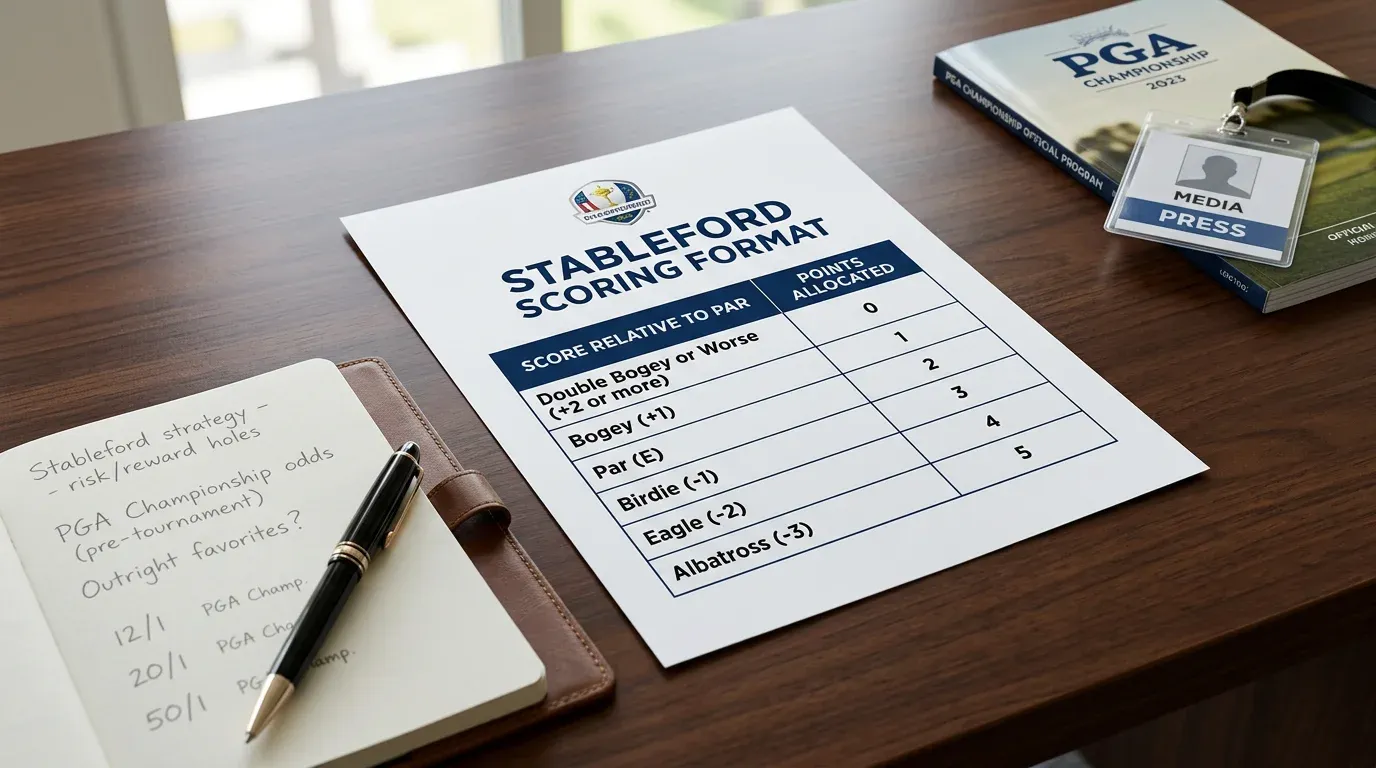
The betting implication: a player known for aggressive play, high eagle rates, and a willingness to attack flags even from awkward positions will be undervalued in Stableford formats by a market that prices primarily from strokeplay form. Conversely, players who post consistent par-avoiding strokeplay results through conservative management — players who “grind” well — are relatively disadvantaged. The patient, bogey-avoiding strokeplay style is worth less in Stableford than in traditional scoring.
When handicapping a Stableford event, specifically look for players with high eagle frequency and above-average birdie rates even if their overall strokeplay scoring average is moderate. A player who averages 68.5 through aggressive play with occasional blowup holes is a much better Stableford profile than one who averages 68.5 through patient par accumulation. The market rarely distinguishes these profiles carefully enough.
Match Play: Why World Rankings Mean Less
Match play is the format where individual holes, not cumulative strokes, determine the result. Win a hole, go one up. Halve a hole, stay level. Lose a hole, go one down. The match ends when one player is ahead by more holes than remain — if you’re three up with two holes to play, you’ve won 3 and 2. The format is used at the WGC-Dell Technologies Match Play, the Accenture Match Play before it, and in team events like the Ryder Cup and Presidents Cup.
Match play changes the betting analysis because the psychological and strategic components become more important than in strokeplay. A player who’s three down with three holes to play in strokeplay is essentially finished — they need three birdies and their opponent needs three bogeys, or something similarly dramatic. In match play, the same player needs to win three holes in a row, which is entirely possible if they play aggressively and their opponent tightens up under pressure.
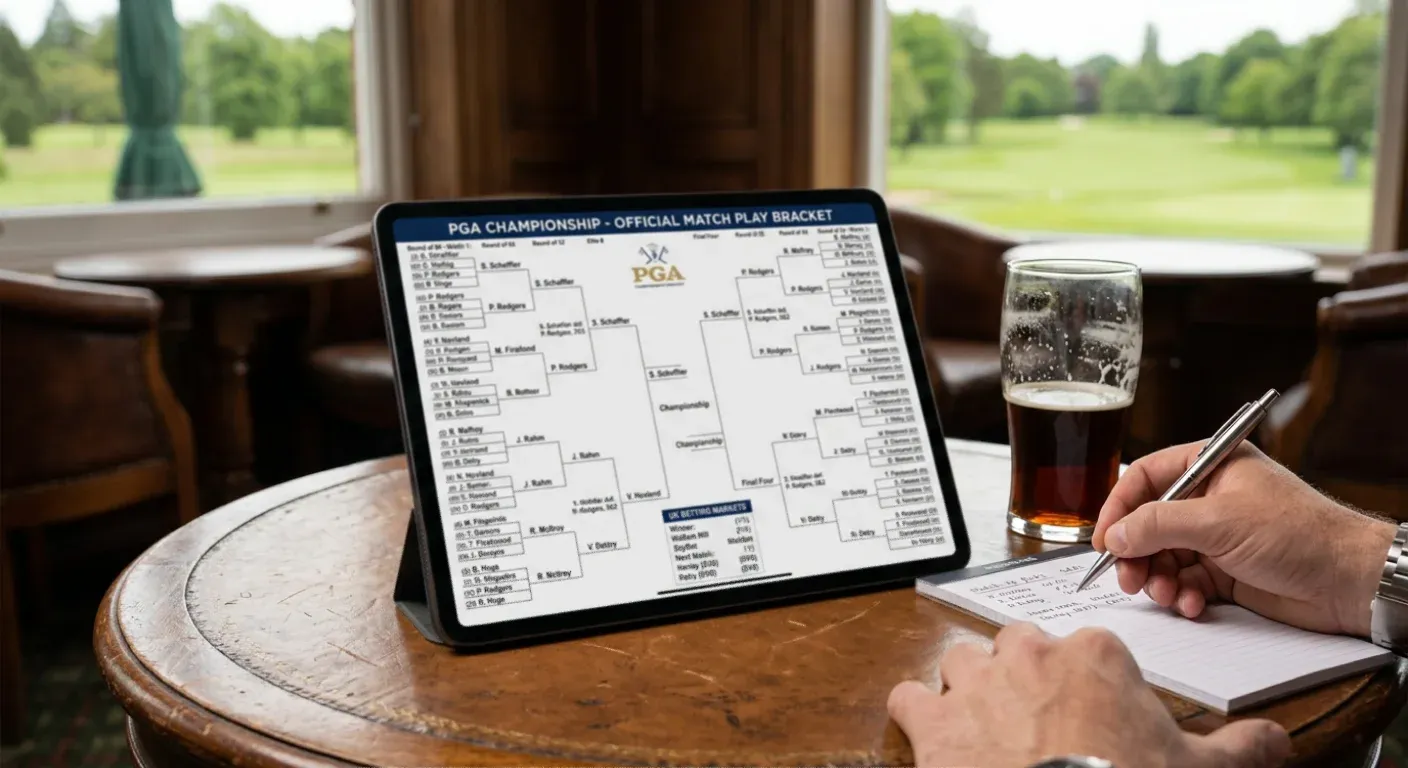
The relevant player characteristics for match play: composure under pressure, the ability to attack when trailing, and a track record of performing well in head-to-head formats specifically. Some players demonstrably play better when the outcome of each individual hole matters rather than when they’re managing a position across 72 holes. Match play veterans — players with Ryder Cup experience, with strong WGC Match Play records — have a demonstrated capacity for the format that world ranking doesn’t capture.
One statistic that doesn’t translate from strokeplay to match play: birdie percentage from difficult positions. In strokeplay, a player who makes seven birdies and three bogeys in a round has scored -4 against par — a good round. In match play, those same three bogeys may have cost three holes while the birdies may not all have been decisive. The hole-by-hole scoring profile matters more than the aggregate.
Cut Formats, 54-Hole Events and What Changes
Professional golf in 2026 includes events across a spectrum of formats beyond the standard 72-hole stroke play. LIV Golf events are 54 holes with no cut. Some developmental tour events are 54 or 72 holes with cuts at different points. The Ryder Cup has no traditional cut structure — it’s match play across three days of sessions.
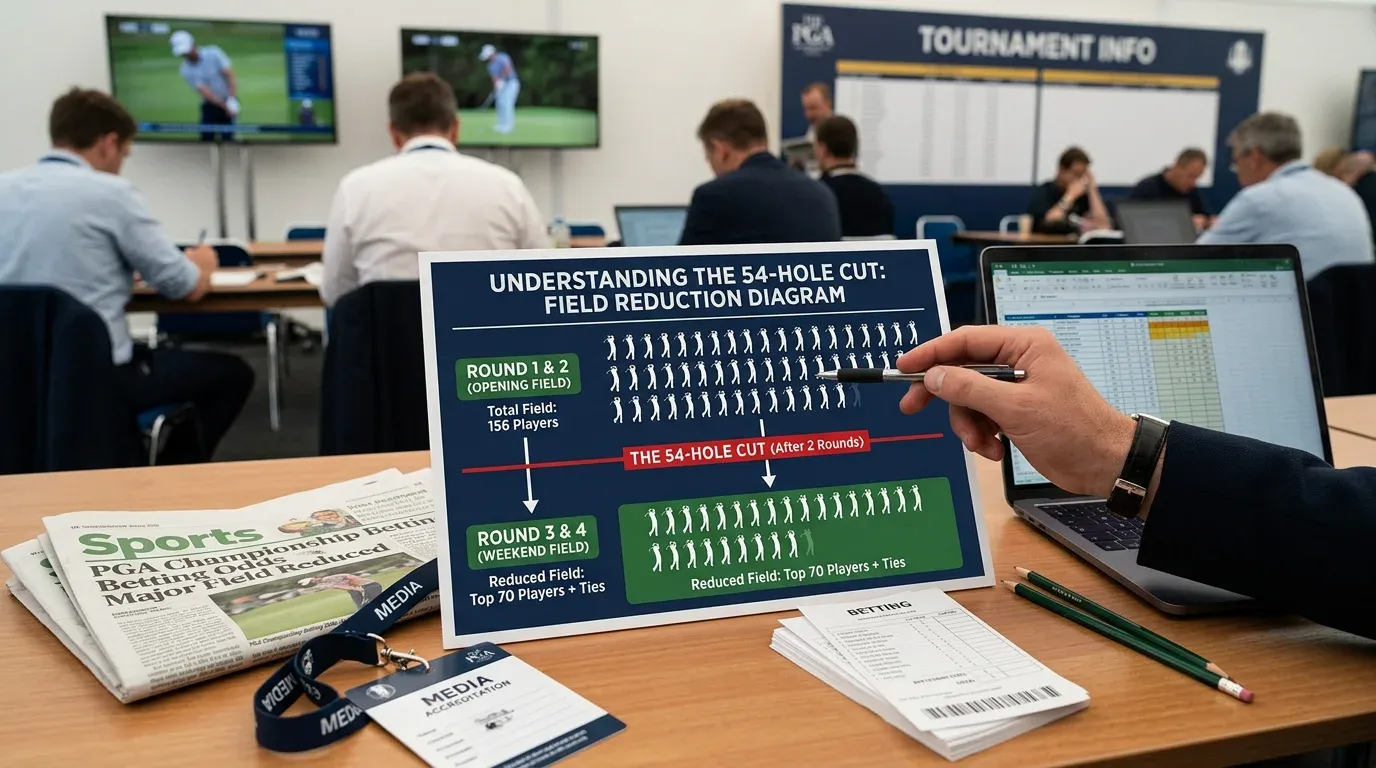
The key betting implications of 54-hole events: less time for form to express itself means hot streaks carry more weight, cold starts are harder to recover from, and variance plays a larger role in outcomes. A player who has been consistently excellent across 72-hole events might have a slightly different probability profile across 54 holes simply because the compounding effect of sustained quality has less time to operate. The mathematics favour variance over quality in shorter events, which means long-shots have relatively higher true probability across 54 holes than the same player would in a 72-hole field of similar strength.
Events with no cut eliminate the strategic element of cut-making, which affects how players manage their rounds. In a traditional 72-hole event, players in danger of missing the cut may play more conservatively in round two to protect their position. In a no-cut event, every player plays all four rounds — there’s no managed play around a threshold. This creates a slightly different performance profile for players who typically use conservative round-two management as a strategic tool. The broader context of how tour structures affect betting, including how the DP World Tour and PGA Tour formats compare, is covered in the guide to PGA Tour free picks and research methodology.

Frequently Asked Questions
How does Stableford scoring affect which players to back?
Stableford scoring rewards aggressive play and penalises conservative par accumulation. Players with high eagle and birdie rates — even if their overall strokeplay scoring average is affected by occasional blowup holes — are relatively advantaged. Look specifically for eagle frequency and birdie rate rather than overall scoring average. The market tends to undervalue high-upside aggressive players in Stableford formats because it prices from strokeplay form.
Is match play betting different from strokeplay betting?
Yes, significantly. Match play rewards the ability to attack when trailing and to compete hole-by-hole under pressure. World ranking is less predictive of match play performance than in strokeplay, because match play introduces psychological and strategic variables that aggregate form doesn't capture. Players with strong Ryder Cup and match play records have demonstrated specifically this skill. Check head-to-head match play records and Ryder Cup performance alongside standard form metrics.
Do 54-hole events without a cut change the value of favourites?
Yes. Shorter events with no cut give variance more influence over outcomes because quality has less time to compound. Long-shots have slightly higher true winning probability in 54-hole fields than in 72-hole fields of similar strength, because a single exceptional day represents a larger proportion of the total event. This makes the each-way case for longer-priced players slightly stronger in 54-hole events, particularly when the best operators are offering generous place terms.
Articles
Golf Betting Odds Explained
The number of UK adults who bet on sport online is around 8% — that's millions of people placing wagers…
Golf Betting Exchange Tips UK
The first time I laid a player on a betting exchange and watched them make a quadruple bogey on the…
The Open Championship Betting Tips
Every year, The Open Championship delivers at least one moment that makes casual observers think it's unpredictable. Every year, the…
Masters Betting Tips
Augusta National is the most predictable Major venue in golf — if you're looking at the right metrics. That sounds…
