
Golf Betting Odds Explained: UK Formats, Markets and How to Read Them
 Available in US
The number of UK adults who bet on sport online is around 8% — that’s millions of people placing wagers every month on everything from football to horse racing to golf. What’s interesting is how many of them do so without a clear understanding of what the odds they’re accepting actually represent. I spent my first year betting on golf without ever converting a price to an implied probability, which means I was backing selections without knowing whether the price reflected a reasonable chance of winning or a terrible one. That’s a fixable problem, and this guide fixes it.
Fractional vs Decimal Odds: A Quick Converter
UK bookmakers traditionally display odds in fractional format — 5/1, 20/1, 7/2 — though most now offer the option to switch to decimal. Understanding both is worth your time because different platforms use different defaults, and being fluent in both prevents the confusion that makes punters accept worse prices than they realise.
Fractional odds tell you how much profit you make per unit staked. At 5/1 (read as “five-to-one”), a £10 bet returns £50 profit plus your £10 stake back, so £60 total. At 7/2, a £10 bet returns £35 profit plus £10 stake back, so £45 total. The format “profit/stake” is the principle: the first number is your profit per second-number units staked.
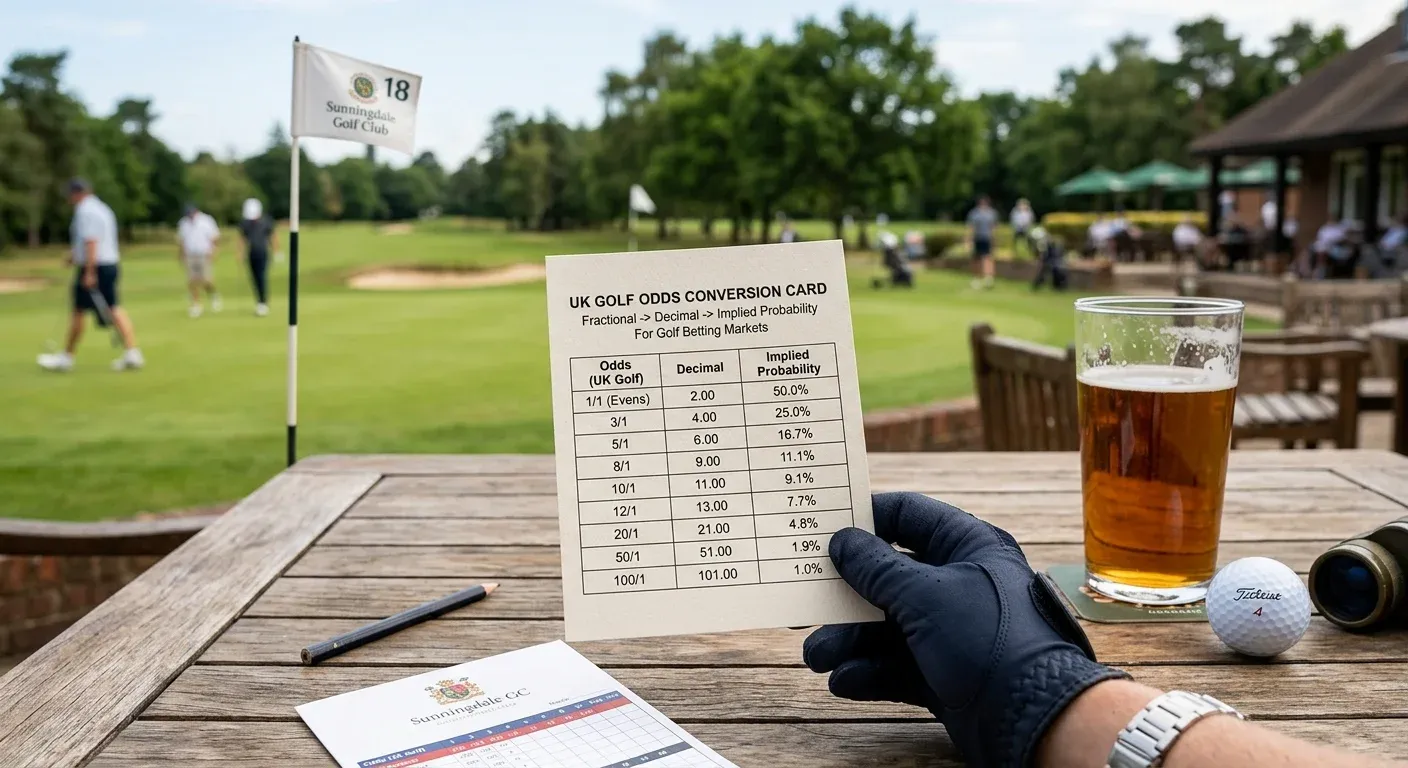
Decimal odds represent the total return per unit staked including stake. At 6.0 (decimal equivalent of 5/1), a £10 bet returns £60 total — which is your £50 profit plus your £10 stake. Converting between formats: fractional to decimal, divide the first number by the second and add 1. So 5/1 = (5/1) + 1 = 6.0. Decimal to fractional: subtract 1 from the decimal, then express as a fraction. 4.5 decimal = 3.5/1 = 7/2 fractional.
Common golf prices and their decimal equivalents: 6/4 = 2.5, 2/1 = 3.0, 5/2 = 3.5, 3/1 = 4.0, 9/2 = 5.5, 5/1 = 6.0, 8/1 = 9.0, 10/1 = 11.0, 20/1 = 21.0, 33/1 = 34.0, 50/1 = 51.0, 66/1 = 67.0, 100/1 = 101.0. Keep this conversion framework in your head and you’ll move between formats instinctively within a few weeks.
How Bookmakers Set Golf Odds
Sports betting represents over 57% of the UK’s online gambling market — and within that, the competition between bookmakers to attract customers is fierce. Understanding how odds are created helps you understand when they’re fair and when they’re not.
Golf outright odds for a weekly PGA Tour or DP World Tour event are typically constructed using a combination of automated models, manual assessment by golf trading teams, and market signals from early betting activity. The automated models draw on player world rankings, recent form, SG metrics where available, and course history. Manual adjustments account for factors the model doesn’t capture: a player’s recent injury, a known affinity for a specific course type, or a strong betting move on a player from informed sources.
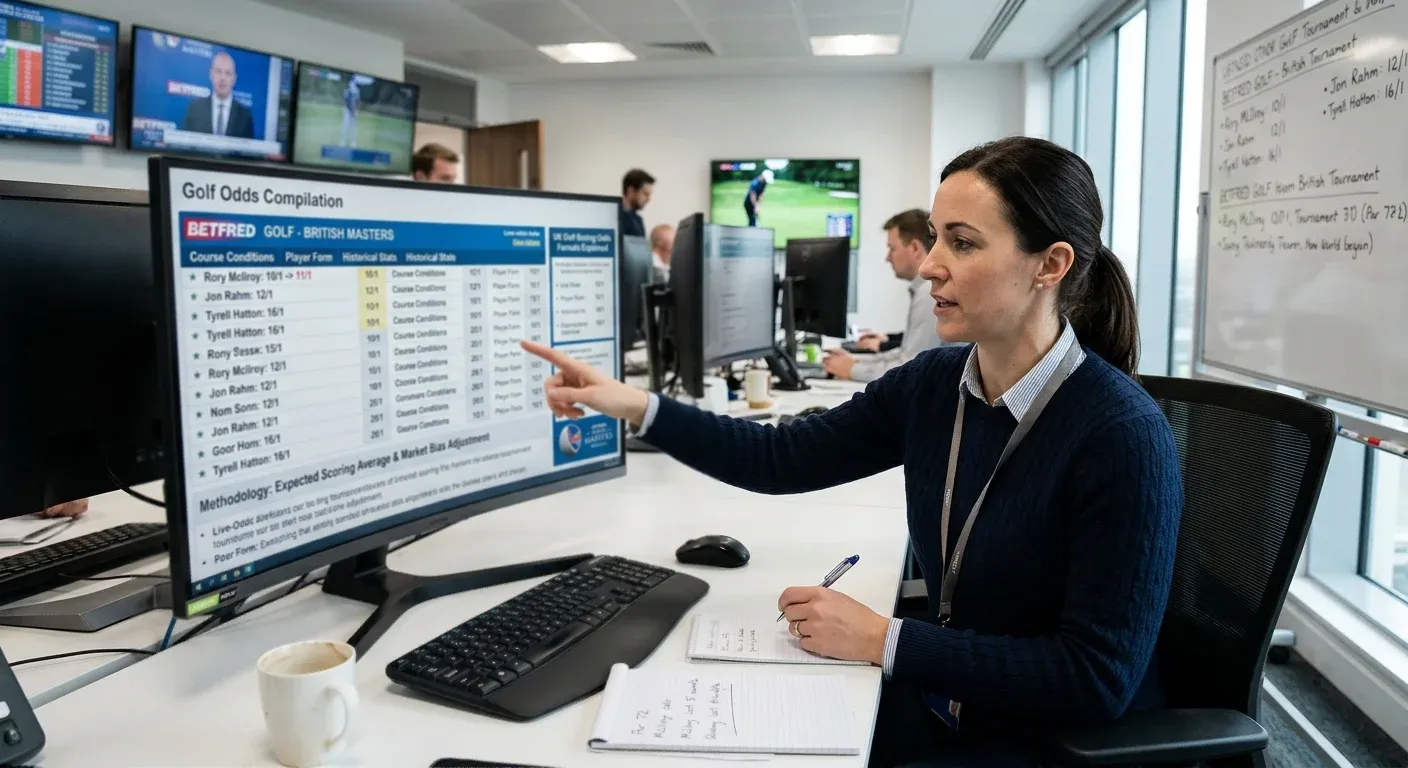
The final prices in the market add up to more than 100% probability — the overround or “vig.” In a typical 156-player golf outright market, the combined implied probability of all players might sum to 120-140%, meaning the bookmaker has built a 20-40% margin into the market across all selections. This is why backing random selections at market prices is a losing strategy in the long run: you’re paying a premium on every bet you place.
Prices tighten as an event approaches. Tuesday prices are typically longer than Friday morning prices for the same player, because smart money has flowed in, sharper analysis has been done, and the bookmaker has adjusted their risk position accordingly. The market is most generous to the informed punter early in the week, before the smart money has fully priced in available information.
Reading an Outright Golf Market
Open a golf outright market for the first time and you’ll see perhaps 30-40 players displayed with individual prices, and then a “others” or “remaining players” category at a fixed price. The market is structured in tiers: pre-event favourites and recognisable names at the front, with longer-priced players further down.
The front of the market contains the players with the lowest prices — shortest odds, highest implied probability of winning. In a typical PGA Tour event, the favourite might be priced at 9/1 to 12/1, implying a probability of 8-10% of winning. That’s unusually short for golf, and reflects the relative quality gap between the top-ranked players and the field. In a weaker event where the big names aren’t present, the favourite might be 5/1 or even 7/2.
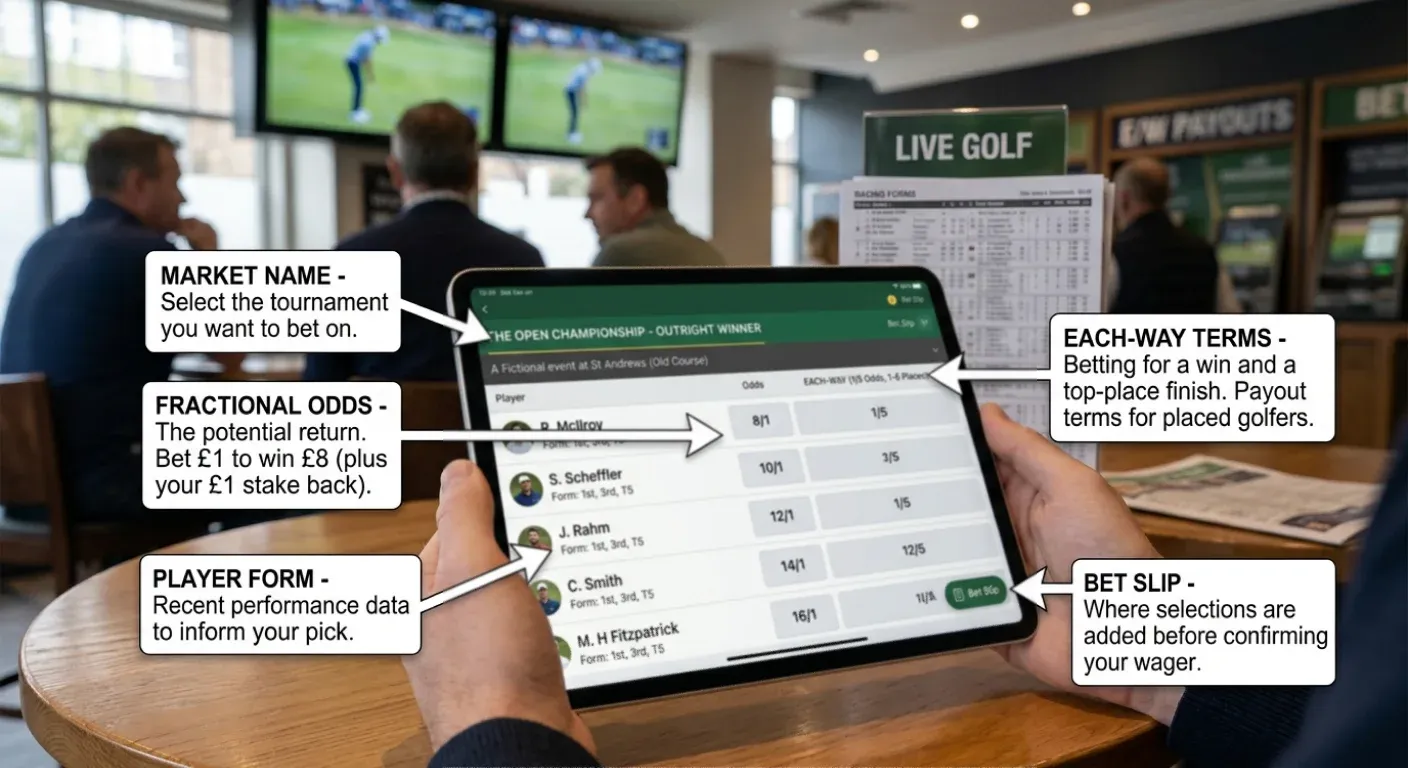
The mid-section — players priced 20/1 to 80/1 — is where most of the betting volume on value selections sits. These players have genuine winning chances but are not expected to contend by the average punter. The back of the market, priced 100/1 to 500/1 and beyond, contains players with minimal realistic winning probability. These odds do occasionally land — that’s the definition of a longshot — but they shouldn’t form the basis of a systematic betting strategy.
Reading a market critically means not just identifying prices but converting them to probabilities and comparing them to your own estimates. A player at 40/1 implies a 2.4% chance of winning. If your analysis suggests they have a 4-5% chance, that’s a meaningful value gap and a strong each-way case. If your analysis suggests 1.5%, the 40/1 price is actually shorter than the reality warrants.
Favourite vs Longshot: What the Odds Tell You
Golf has a distinctive relationship between favourites and longshots that differs from most sports. Because the field is so large and golf is so variable, even the best player in the world wins fewer than 20% of events they enter in their prime years. That means favourites in golf are perennially underperforming their short prices in absolute terms — not because the market is wrong, but because the game itself resists the dominance that favourites achieve in sports with smaller competitive sets.
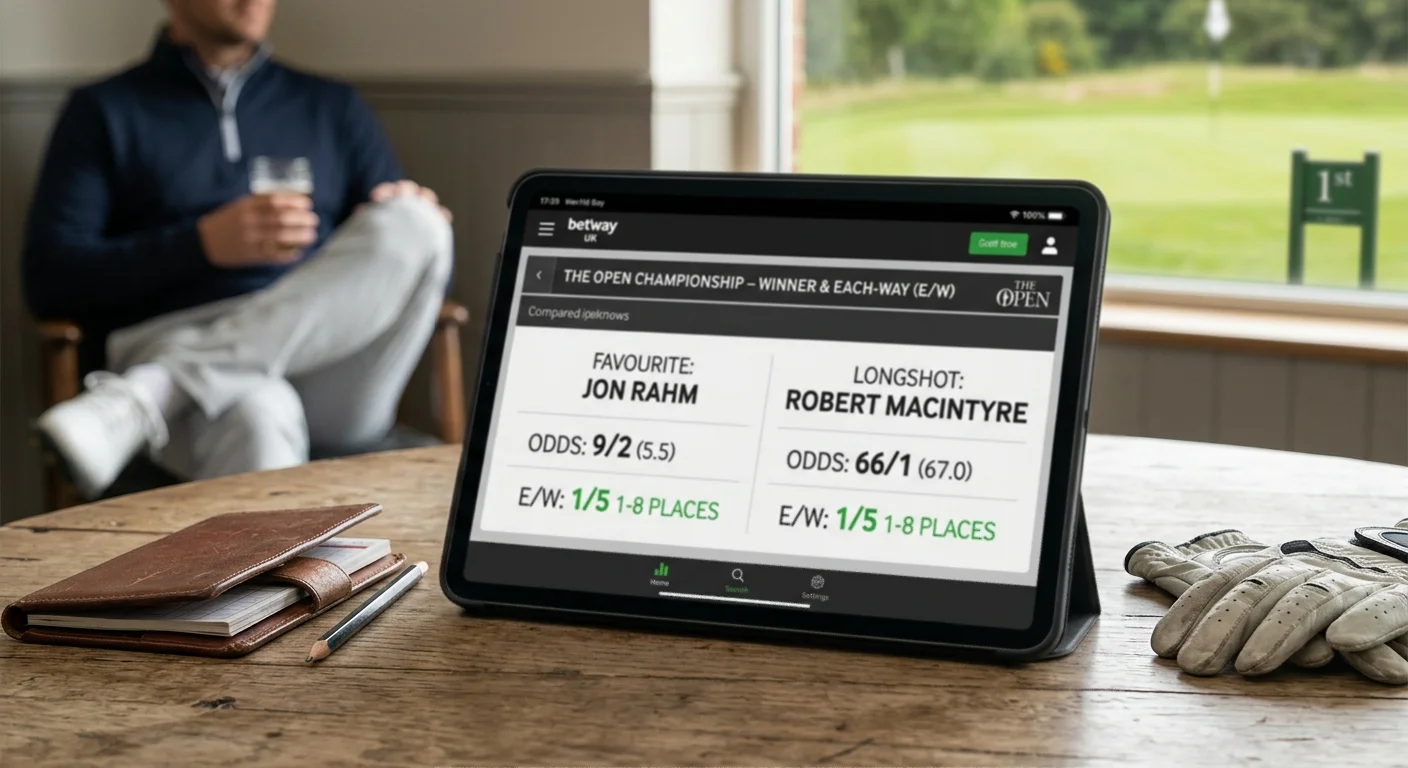
This creates a consistent dynamic: longshots — players priced 50/1 to 200/1 — actually deliver positive ROI at these prices more often than the implied probabilities suggest, because the “longshot bias” of the market consistently underestimates the realistic winning probability of unknown or less-fashionable players. The best golf bettors exploit this by identifying the subset of longshots whose game profiles genuinely match the current event, rather than backing longshots indiscriminately.

The practical application: in any golf outright market, the true value is rarely at the very front of the board. The 8/1 favourite might be a great player, but you’re getting only a modest return on what is probably an 8-10% realistic probability. The same level of analytical effort applied to a 50/1 selection with a genuine 4% chance of winning produces better expected return per pound staked. Understanding the full picture of value identification, including how to calculate implied probability and compare it to your own assessments, is covered in detail in the guide to golf betting value bets explained.
Frequently Asked Questions
What is the difference between fractional and decimal odds in golf?
Fractional odds show profit per unit staked: 5/1 means £5 profit per £1 staked, plus stake returned. Decimal odds show total return per unit staked including stake: 6.0 means £6 total returned per £1 staked. To convert fractional to decimal, divide the numerator by denominator and add 1. Most UK bookmakers offer both formats — choose whichever you find more intuitive.
How do bookmakers calculate the opening odds for a golf tournament?
Opening odds are built from a combination of automated models using world rankings, recent form, and course history, plus manual adjustment by trading teams. The combined implied probability of all players sums to more than 100% — typically 120-140% for a large golf field — which represents the bookmaker's built-in margin. Prices tighten as betting activity reveals smart money and new information becomes available closer to the event.
What does 25/1 mean in golf betting?
At 25/1, a winning £10 bet returns £250 profit plus your £10 stake, so £260 in total. The decimal equivalent is 26.0. The implied probability is 1 divided by 26, approximately 3.85%. This means the bookmaker is pricing the player as having roughly a 1-in-26 chance of winning the tournament. If your analysis suggests their actual chance is higher — say 6% or 7% — you have a value bet.
Articles
LIV Golf Betting Tips
LIV Golf has been running long enough now that the novelty argument for ignoring it in betting terms has expired.…
Mobile Golf Betting in the UK
The shift to mobile-first golf betting happened quietly but completely. I remember when placing a golf bet on your phone…
Golf Betting Value Bets Explained
The word "value" gets thrown around in betting circles so often it's almost lost meaning. Every tipster claims to find…
DP World Tour Betting Tips
The DP World Tour gets substantially less analytical attention per event than the PGA Tour, and that's precisely where the…
