
The Open Championship Betting Tips: How Links Golf Reshapes the Market
 Available in US
Every year, The Open Championship delivers at least one moment that makes casual observers think it’s unpredictable. Every year, the serious analytical work suggests otherwise. The players who contend at Open venues are not randomly distributed across the world rankings. They come disproportionately from a specific pool — players with ball-flight control, patience, creative shot-making, and a genuine history of performing in links conditions. The market doesn’t always price this pool correctly, which is precisely where the betting value lives.
Why The Open Is Unlike Any Other Major
Augusta has its bermudagrass greens and its approach-play premium. The US Open has its USGA-imposed difficulty and its premium on accuracy. The PGA Championship has its rotating venue diversity. The Open has something none of the other three can offer: genuine links golf on actual coastline, where the ground game is as important as the aerial one, and where a 25mph wind can turn a straightforward 150-yard approach into a genuinely creative problem.
More than 980,000 spectators attended The Open Championship, PGA Tour events, and the Ryder Cup combined in a recent year — with The Open representing a disproportionate share of that international golf tourism. The event is genuinely global in its appeal and its betting activity. UK punters have a structural advantage here: familiarity with links golf conditions, awareness of the specific venues, and access to a longer history of results data for the seaside courses in the rotation.
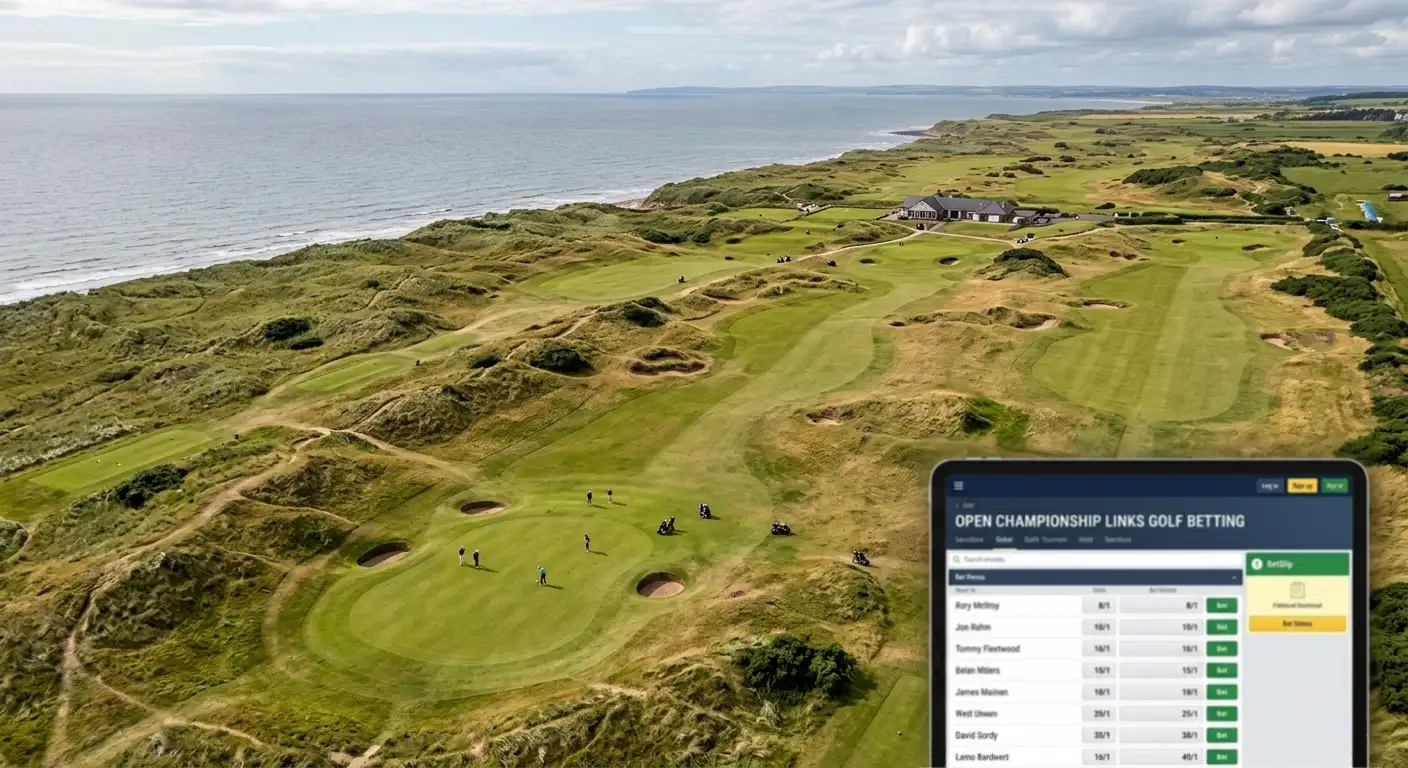
The core distinction that makes The Open analytically unique: the ground game counts. At Augusta, approaches that land on the green are rewarded. At an Open venue in July wind, approaches often need to land 30 yards short of the green and release through to the hole. Players who’ve never practised this type of shot — who’ve spent their entire careers on parkland courses where aerial approaches are the only way to hold a green — are at a genuine disadvantage, regardless of their world ranking. The market’s pricing of these players is often too generous.
Player Profile for Links Success
I’ve built a consistent framework for identifying Open contenders that’s independent of the specific venue rotation and the specific field. The profile has five components, and the more boxes a player ticks, the stronger their claim as a selection.
First: trajectory control. Low-ball hitters with the ability to flight irons under the wind have a structural advantage at Open venues. High-ball hitters can still compete — and some do — but they require calm conditions to do so, and Open week is rarely calm. Check a player’s average ball height and trajectory characteristics; some analytics platforms publish this data.

Second: creativity and course management. Links courses require shots that don’t exist in parkland golf — the bump-and-run, the punch three-quarter wedge, the running long iron approach. Players who’ve shown this creativity in previous Open appearances, or who have strong histories on European links tracks, are better equipped.
Third: putting on fast, undulating surfaces. Open greens in dry July conditions can be quick. A player with strong putting statistics on links-style greens — poa annua specifically, which appears at many Open venues — is better placed than one whose putting numbers come predominantly from bentgrass or bermudagrass surfaces.
Fourth: patience. Opens are won by the player who avoids catastrophic mistakes rather than the one who makes the most birdies. Bogey avoidance rate — particularly on specific hole types like blind drives, deep rough, and pot bunkers — is a meaningful filter. A player with excellent bogey avoidance on difficult course types is temperamentally suited to the patient Open strategy.
Fifth: specific links experience. The Open rotates between a set of established venues. A player with a strong record specifically at the venue being played — St Andrews, Royal St George’s, Muirfield, Royal Liverpool, Royal Birkdale — has demonstrated that their game translates to that particular track.
Ball-Flight, Wind and Running-Game Advantage
Let me be precise about why ball-flight matters in wind — because it’s more nuanced than “low ball good, high ball bad.”

In a strong headwind — 20mph or more directly against you — a high-ball hitter adding loft to their natural flight faces two compounding problems. The ball takes significantly longer to get to the target, gathering more wind effect throughout. And the shot is inherently harder to control for distance because the wind acts as an amplifier of any timing inconsistency. A slightly thin shot becomes a massive overcook into the rough behind the green.
Low-ball hitters naturally fight the wind rather than working with it. Their shots pierce rather than balloon, which means the distance control curve is tighter even in variable conditions. This advantage compounds over 72 holes at a links venue: where a high-ball hitter might take four extra strokes per round from wind-affected distance control, a low-ball hitter might take one.
The running-game advantage is similarly real but more contextual. Links courses present many situations where the approach is better served by a running shot than an aerial one — when the flag is near the front of the green and a landing zone short of the green is available, when the pin is protected by a rear bank, when the wind makes aerial distance control unreliable. Players who don’t have this shot in their arsenal are forced to attempt aerial approaches in situations where a running shot is the correct tactical play. That forces errors.
The best Open bettors I’ve seen work with a simple rule: identify which players in the field have genuine links experience and a ball-flight profile suited to wind, and let those players occupy the top of your selection list before you consider anything else. Combine this with the broader course-condition analysis covered in the detailed guide to weather conditions and golf betting to complete your Open Championship research.
Each-Way Value at The Open
The Open Championship typically runs with a full field of around 155 to 160 players, making it one of the larger Major fields. The extended each-way terms that top UK bookmakers have been offering — Bet365 alone offered 563 additional each-way places across all Majors, PGA Tour, and DP World Tour events in 2025 — create meaningful each-way value opportunities at Open odds.

My approach to Open each-way selection: identify the three or four players who best fit the links profile described above — ball-flight, course management, patience, links experience — and assess their market prices. For players priced in the 25/1 to 60/1 range who fit the profile strongly, each-way backing at eight or more places gives you a place price of 5/1 to 12/1. If your probability assessment for a top-eight finish is 15% or better for that player, the each-way component is generating positive expected value.
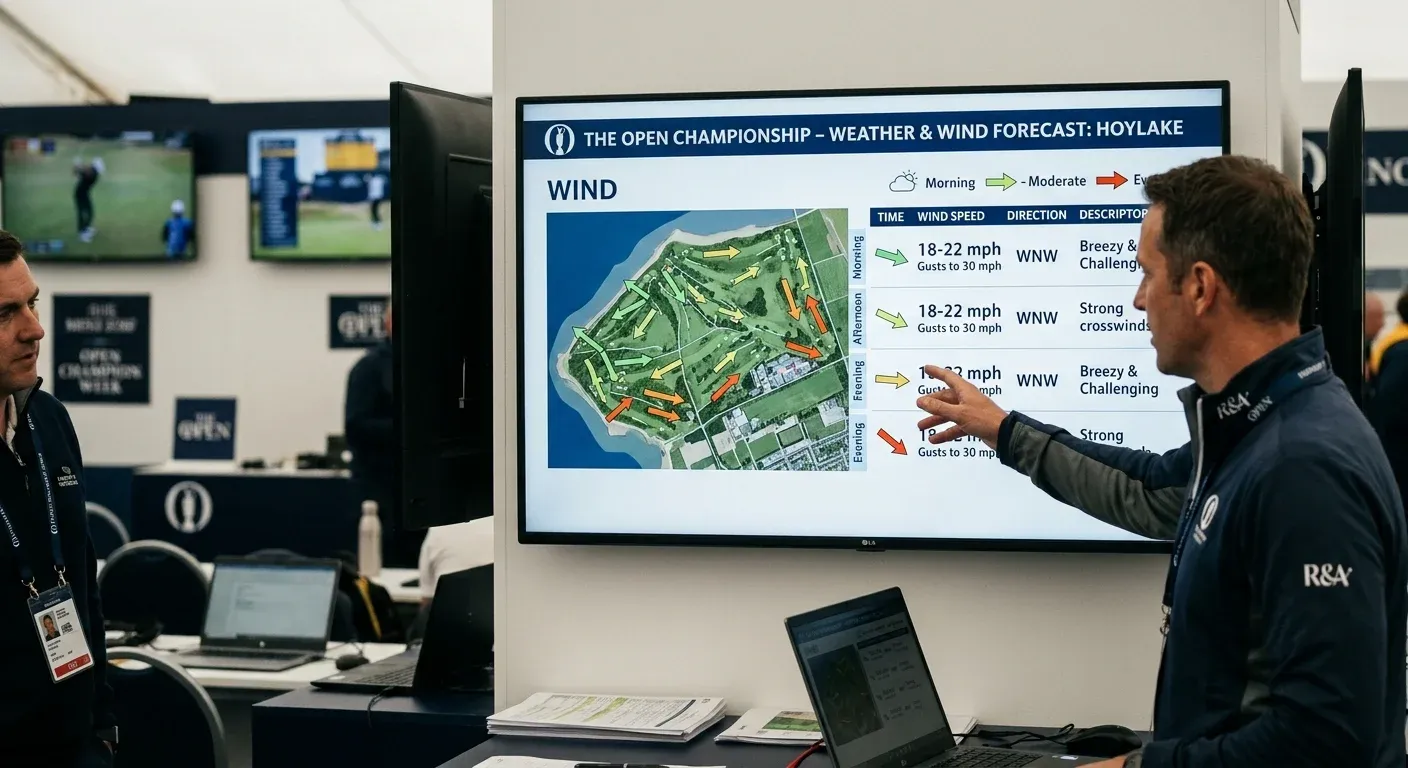
Avoid the temptation to back the obvious “links specialist” at short prices because the narrative around their game is compelling. If the story about a player’s links credentials is widely known, it’s already in the price. The value is in the player whose links profile is strong but whose broader reputation hasn’t caught up with the market — typically a player who hasn’t had a great year overall but whose specific skills translate to this environment.
Frequently Asked Questions
Does playing experience on links courses matter for Open Championship betting?
Yes, significantly. Open venues are links courses and the demands are genuinely different from parkland or parkland-with-rough courses. Players without meaningful links experience — whether from the Open rotation, Scottish events, or similar DP World Tour links tracks — face an unfamiliarity disadvantage even if their overall form is excellent. Prioritise players who've demonstrated they can score on links layouts specifically.
How does wind affect Open Championship odds and markets?
Wind is the primary variable at most Open venues. Pre-event odds are priced on expected conditions but the specific forecast on Thursday morning may differ significantly from Tuesday's market prices. As wind increases above 20mph, low-ball hitters and ball-strikers with strong wind management gain relative advantage over power players. Bookmaker odds don't always fully reprice for weather updates before tee time, creating short windows of value.
What each-way terms do UK bookmakers offer for The Open?
Standard terms are five places at one-quarter the win odds. Enhanced terms of eight or more places are available from several major UK bookmakers for The Open Championship specifically, typically announced in the week before the event. With a field of around 155 players, eight-place each-way coverage represents the top 5% of the field — always compare available terms across operators before placing.
Articles
Golf Betting Systems That Work
I've been approached over the years by people wanting to share their golf betting "system" — usually with great excitement…
Golf Outright Tips
Backing a tournament winner before a ball has been struck is the purest form of golf betting — and the…
Ryder Cup Betting Tips
The Ryder Cup is the event where everything I know about individual player form becomes significantly less useful than my…
Dead Heat Rules in Golf Betting
The first time a dead heat cost me real money, I had no idea what had happened. My player finished…
