
DP World Tour Betting Tips: Why the European Tour Calendar Rewards Patient Research
 Available in US
The DP World Tour gets substantially less analytical attention per event than the PGA Tour, and that’s precisely where the betting edge lives. I’ve spent years tracking both tours simultaneously and the pattern is consistent: DP World Tour markets open with less sharp pricing, stay inefficient for longer, and close at less precise probabilities than equivalent PGA Tour markets. Less information in the market means more frequent mispricings, and more frequent mispricings means better expected value for the punter who bothers to do the work.
How DP World Tour Betting Differs from PGA Tour
The PGA Tour generates enormous betting volume, attracts professional quant traders, and is covered by sophisticated analytics platforms with comprehensive ShotLink data. By the time the PGA Tour market closes on Thursday morning, the prices are among the most efficiently priced in any global sports betting market. The edge available to a retail bettor is real but narrow.
The DP World Tour operates on a different scale. The tour’s total commercial reach — measured in broadcast rights, official global ranking points, and corporate sponsorship — is substantially smaller than the PGA Tour’s $2.5 billion market valuation. That smaller commercial footprint means fewer professional bettors are analysing the markets, less automated pricing systems are tracking every data point, and the human traders at the bookmakers are allocating less dedicated time to pricing individual DP World Tour events compared to major PGA Tour weeks.

The practical result: Tuesday morning prices on DP World Tour events are often genuinely mispriced relative to the information available. A player who’s clearly the strongest SG:APP performer in a field on a bermudagrass course might be priced at 12/1 on a DP World Tour event when comparable analysis of a PGA Tour event would have the market at 8/1 or 9/1. That 12/1 is available because fewer analysts have done the work — and because online real event betting growing to £596 million per quarter is still dominated by football, horse racing, and the most prominent golf events rather than midweek DP World Tour rounds.
The European Tour Calendar: Key Swing Dates and Venue Types
The DP World Tour calendar runs across three broad geographic phases in a typical year: the early-season swing through the Gulf states and Asia, the European summer sequence across parkland and links venues, and the autumn events building toward the season-ending DP World Tour Championship in Dubai. Each phase has distinct characteristics for betting purposes.
The Gulf state swing — events in Qatar, UAE, and nearby markets — typically plays on desert-style parkland courses with bermudagrass greens and moderate winds. These events feature relatively weak fields by DP World Tour standards because the top-ranked European players tend to prioritise the summer events and the major preparation swing. The weaker fields create interesting dynamics: players who might be 40/1 in a full European field can be 12/1 in a depleted Gulf swing event, and the genuine quality gap between top and bottom of the field is smaller. Outright value tends to concentrate in the 10/1-20/1 range rather than the longshot tier.

The European summer sequence includes the prestigious Rolex Series events and the build-up to The Open Championship. These weeks attract the strongest fields of the tour year, including American players competing for world ranking points and Ryder Cup qualification. Markets are more efficiently priced during this phase because more betting activity flows through and the roster of well-known players makes pricing easier. The pre-Open weeks — events at Scottish links venues in particular — offer some of the most interesting betting because the course conditions and player profiles create genuine analytical differentiation that the market doesn’t always price correctly.
The autumn phase includes shorter-format events and regional qualifiers. These weeks often feature thinner liquidity in betting markets and more volatile pricing. Players who are running hot over the back half of a season — riding a form wave into the autumn — can represent value in markets where recency isn’t fully weighted by bookmaker pricing algorithms.
Finding Value Where the Market Is Thin
The limited data infrastructure for DP World Tour events is both a challenge and an opportunity. Without ShotLink coverage, you don’t have the same granular Strokes Gained data that underpins PGA Tour analysis. What you do have: official DP World Tour statistics (available at europeantour.com/stats), the partial SG coverage that DataGolf provides for European tour events, and the results-based form that you can compile manually from public leaderboards.
The analytical approach I use for DP World Tour research starts with course type classification — this is even more important than on the PGA Tour because the variance in venue types across the European calendar is larger. A player who excels at the tight, tree-lined parkland tracks favoured by UK inland events may perform quite differently at an exposed links venue or a desert course with vast bermudagrass greens. Without granular SG data, course-type fit analysis based on results history is the primary filter.
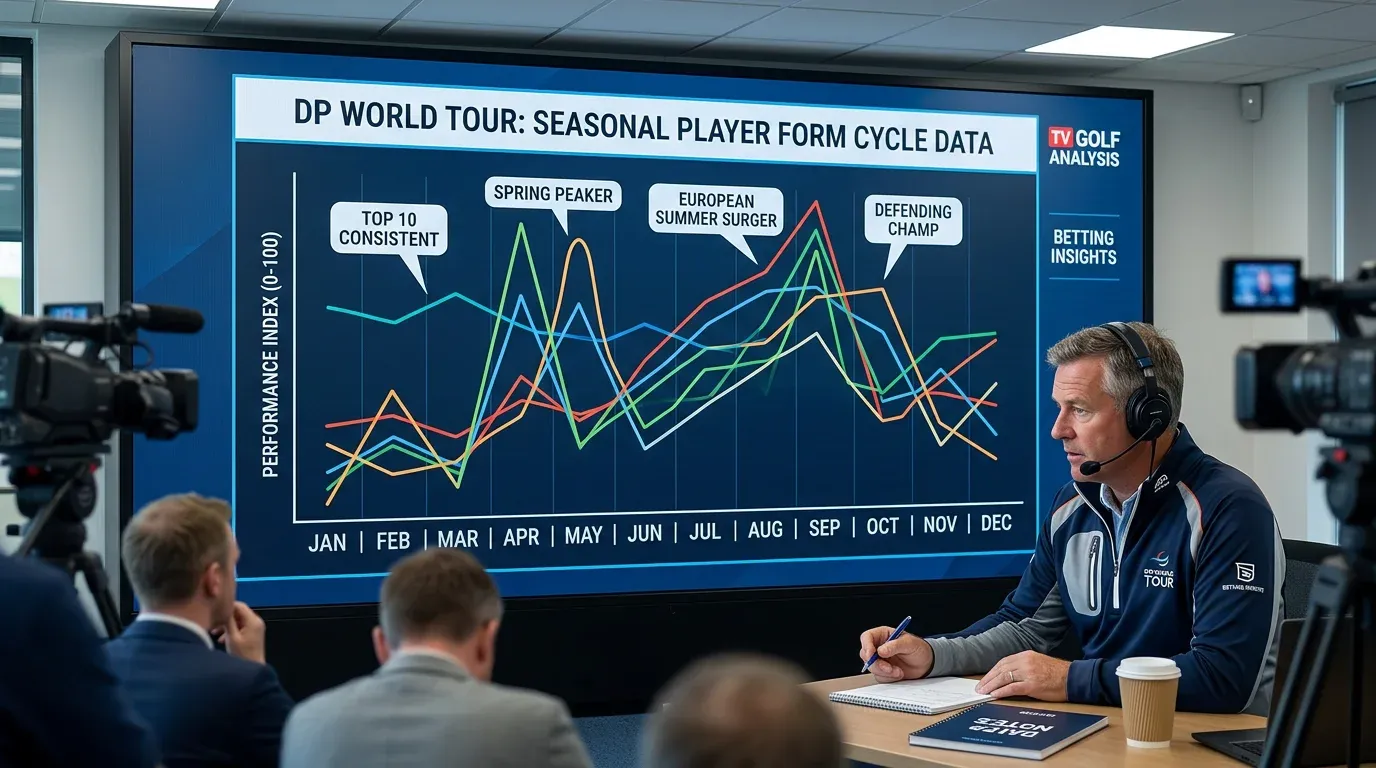
A player who has three top-20 finishes at venues with similar architectural characteristics to the current week’s venue, combined with strong recent form (top-15 in the previous three starts), is a more defensible selection than one whose case rests primarily on world ranking. In markets where the pricing is less efficient, this kind of specific research produces genuine edge — the market is pricing from general reputation and ranking rather than from course-specific analysis.
DP World Tour Players to Track Beyond Rankings
A number of consistently profitable analytical observations about DP World Tour betting: players who are comfortable at lower commercial profile events — those who aren’t distracted by the media and corporate demands that accompany major PGA Tour weeks — often perform more consistently on the DP World Tour than their mixed results on the combined schedule would suggest. The focused, low-distraction tournament environment suits certain personality types.

Course form on the DP World Tour is often more persistent than PGA Tour course form because the tour visits some venues every year over longer periods. A player who’s made the top 20 at a specific event three times in five years has demonstrated a genuine skill-venue match that should anchor the historical analysis. This persistence of course fit applies particularly to the established Rolex Series events and to the annual links swing, where the same venues appear on the calendar year after year.
The in-play market for DP World Tour events is where I find the most reliable mispricing. Because fewer professional traders are monitoring the live market, prices after significant in-round events — a double bogey on the opening nine, a birdie run through the back — don’t always fully correct before the next hole. The bounce-back scenario, where a player’s in-play price overshoots on the downside after a bad hole, occurs more frequently in DP World Tour markets than in the tighter PGA Tour environment. Being ready to act within the 90-second window before correction is the same discipline that makes in-play golf trading profitable on any tour — but the windows are slightly wider on the DP World Tour. For the complete in-play trading framework, the guide to golf in-play betting tips covers the approach in full detail.

Frequently Asked Questions
Is the DP World Tour better value to bet on than the PGA Tour?
For punters willing to do their own research, yes. DP World Tour markets are less efficiently priced because they attract less professional analytical attention. The information available is thinner, but so is the competition. A punter who does course-type analysis and results-based form research on DP World Tour events is operating in a relatively less crowded analytical space than the same work applied to a major PGA Tour event.
Where can I find DP World Tour statistics for betting research?
The official European Tour website (europeantour.com/stats) publishes comprehensive player statistics including driving, approach play, putting, and scoring averages for all tour events. DataGolf covers a significant portion of DP World Tour events with SG-weighted rankings and form summaries, though the coverage is less granular than for PGA Tour events. Tournament leaderboard archives from the official site provide results history for course-specific form research.
Which DP World Tour events have the most betting liquidity?
The Rolex Series events — those with the largest prize funds and strongest fields — have the deepest liquidity. The Abu Dhabi HSBC Championship, the Genesis Scottish Open, the BMW PGA Championship at Wentworth, and the DP World Tour Championship in Dubai all attract significant betting volume. Smaller regular-season events have thinner markets, which creates both more frequent mispricings and less ability to place larger stakes without moving the market.
Articles
Golf Betting Tips This Weekend
It's Wednesday afternoon and you've just remembered there's a golf event on this week. The market has been open since…
Golf In-Play Betting Tips
Saturday afternoon, final round of a DP World Tour event, and the lead changes hands five times between the 12th…
Masters Betting Tips
Augusta National is the most predictable Major venue in golf — if you're looking at the right metrics. That sounds…
PGA Tour Free Picks
The paid tipster subscription industry exists because most people don't believe they can do this analysis themselves. Some of that…
