
Golf Outright Tips: How to Back Tournament Winners Before the Week Begins
 Available in US
Backing a tournament winner before a ball has been struck is the purest form of golf betting — and the hardest. When it lands, it’s deeply satisfying in a way that a matched accumulator or a hedged position never quite replicates. When it doesn’t land, you remember exactly why 154 other players were also in the field. I’ve been approaching outright golf betting as a systematic exercise for nine years, and the discipline I’ve built around it comes from learning, sometimes expensively, what separates a good outright selection from a hopeful one.
Win Betting vs Each-Way: Choosing the Right Market
The first decision on any outright golf selection isn’t which player to back — it’s which market structure gives you the better expected return. Win-only and each-way operate differently, and the standard advice to “always back each-way” is significantly oversimplified.
Standard each-way terms in UK golf are five places at one-quarter the win odds. Expanded terms from the best bookmakers in 2026 reached eight, ten, or even twelve places for major events. At standard five-place terms, a player at 20/1 gives you a place price of 5/1 — meaning a £10 each-way stake costs £20 in total, and a top-five finish returns £60 (£50 win profit plus stake on place, effectively £10 place profit). Break-even on the each-way structure requires a combination of win and place finishes that, over time, exceeds the £20 outlay.
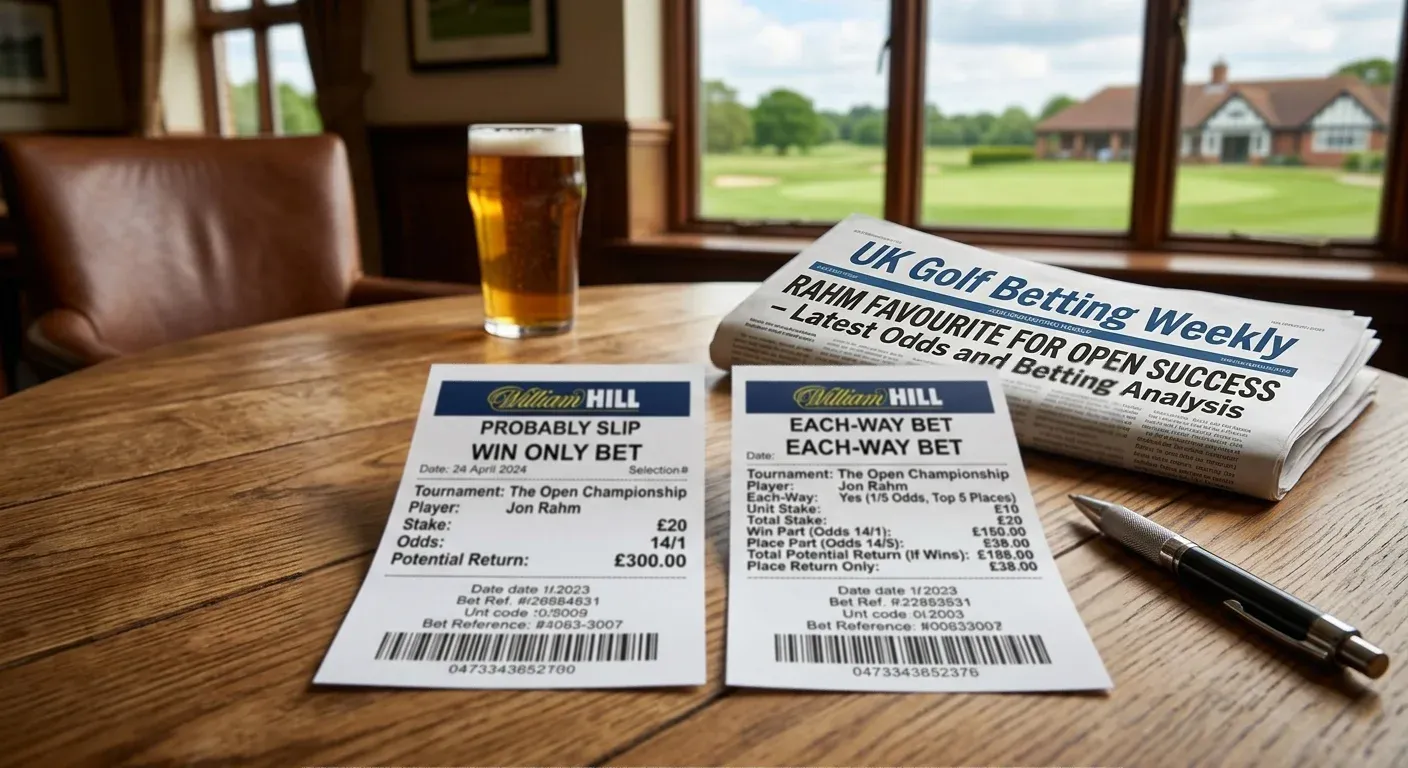
The mathematics favour each-way over win-only when: the player’s genuine win probability is low relative to their place probability, and the place terms are generous relative to the field size. In a 156-player field, a player with a 3% win probability might have a 15% top-five finishing probability. At five places, 1/4 odds, the each-way place component has a positive expected value — meaning the extra £10 stake on the place is positive over the long run.
Win-only beats each-way when the player is priced short enough that the place return is poor relative to the place probability. At 5/1, the place return at one-quarter is 5/4 — a poor return on what might be a 30-40% top-five probability. Win-only captures the full prize without locking money into an under-priced place component. My personal threshold: under 12/1, lean win-only unless the place terms are unusually generous.
Pre-Tournament Research Checklist for Outright Picks
The research process for outright picks is the same framework I use regardless of tournament: venue, SG-match, form, field strength, odds. Five components, always in that order, always before opening the betting market.
Venue first. Classify the course type — bermudagrass or bentgrass greens? Driving course or accuracy course? Links-exposed or parkland-sheltered? This single classification determines which SG categories are primary predictors. Augusta: SG:APP dominant. Open venue: SG:OTT plus ball-flight. US Open: SG:APP plus driving accuracy. Knowing this before looking at player data prevents the availability bias of backing well-known names rather than the correct profiles.
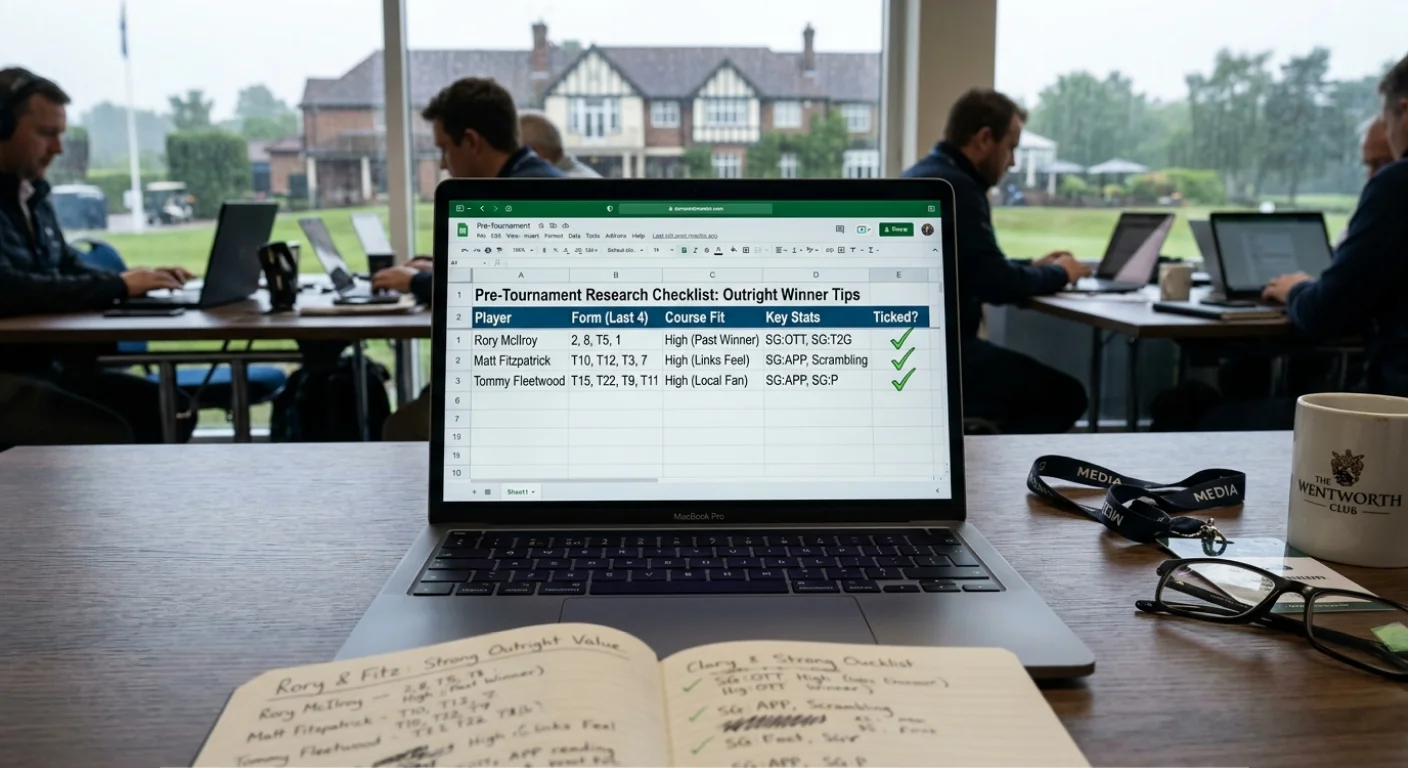
SG-match second. SG:APP is the most predictive metric at a large majority of courses — multiple finalists at the Masters between 2017 and 2025 consistently showed SG:APP above +1.0 per round. Filter your field by the relevant primary SG category, keeping the top 20-25 performers over the previous 12-24 months. This is your base candidate pool.
Form third. Of your SG-based shortlist, which players have made at least four of the last six cuts? At least one top-ten in the same period? Current form confirms that the statistical profile is translating into actual on-course results. A player who was statistically excellent six months ago but hasn’t made a cut in eight weeks is not a good outright selection regardless of their long-term SG numbers.
Field strength fourth. The relative strength of the field affects every player’s absolute winning probability. A player with a 6% winning probability in a weak field might have a 3% probability in a field featuring five of the world’s top ten. Check who’s not in the field — understanding absences is as important as understanding who’s present.
Odds last. Only after completing the first four steps do I open the betting market. The discipline of forming a view before seeing the prices prevents the common error of reverse-engineering a justification for a bet you’ve already decided to place.
Early Prices vs Day-of-Event: When to Place
Golf odds evolve from Tuesday (when most markets open) through Thursday morning (when the first ball is struck). The question of when to place is a genuine strategic decision, not just a matter of convenience.
Early Tuesday prices are the least efficient — the market has had the least time to be sharpened by smart money. This is generally the best time for strong, informed opinions. If your analysis gives you a clear conviction on a selection — a player who fits the profile well, has current form, and is priced generously — Tuesday morning is when the odds are longest and the market is freshest.

By Wednesday afternoon, significant money has moved through the market. Prices on popular selections have shortened. The market has been sharpened by professional analysts, trading algorithms, and the general betting public. Tuesday early prices on a player you’re confident about will often be two to four points longer than Wednesday afternoon prices on the same selection.
The case for waiting: late-breaking information — a practice round injury, a weather forecast update, a confirmed withdrawal that opens the field — can make Wednesday the better entry point for selections affected by that new information. If your selection benefits from a significant field weakening or a favourable weather update, the Wednesday market may offer better value in absolute terms even if the headline price is shorter. Weigh the informational advantage of waiting against the price advantage of going early — both are real, and the balance depends on the specific situation.
Shortlisting Three to Five Outright Candidates
My practical outright selection process ends with three to five candidates per tournament. Any more than five and I’m being indiscriminate; any fewer than three and I’m missing legitimate value opportunities that my process has identified.
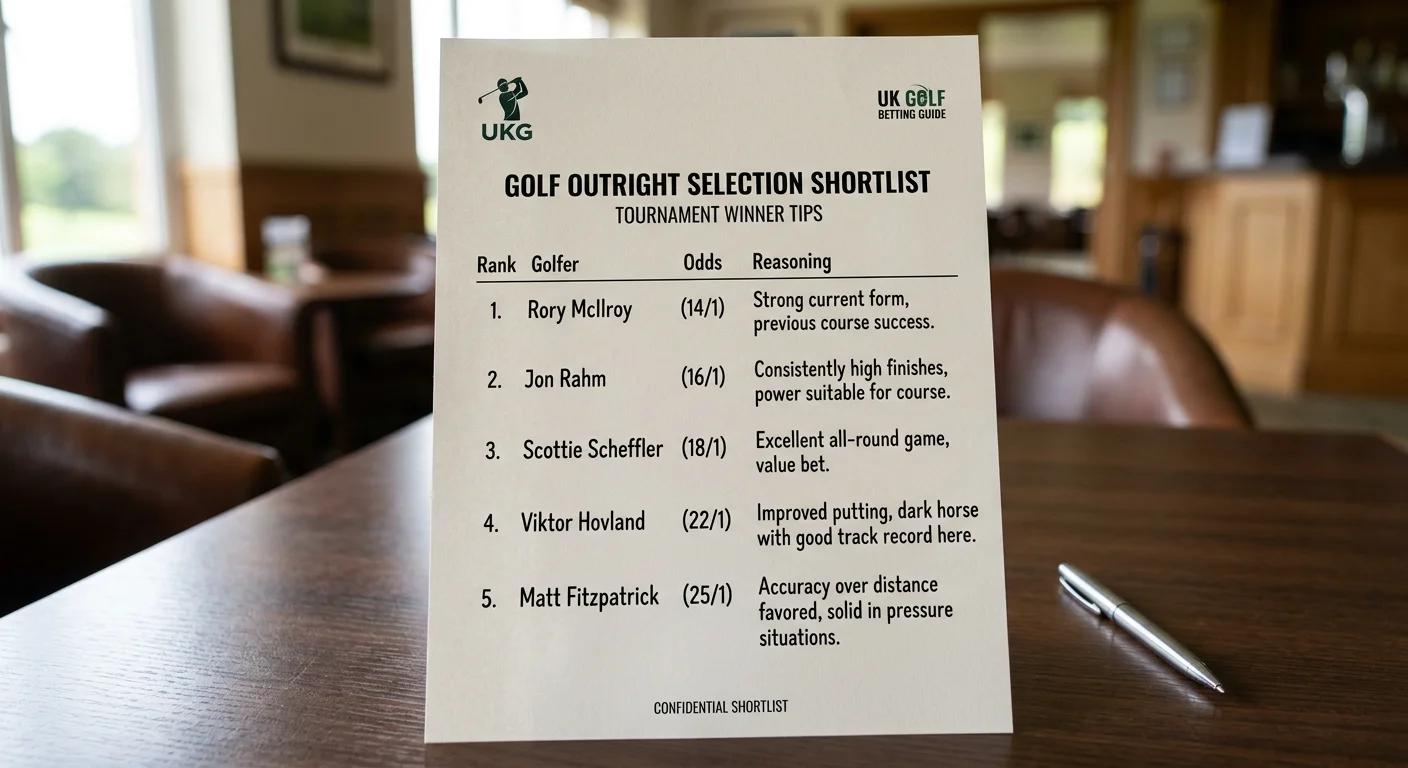
From the shortlist, I weight my stakes inversely by implied probability — longer-priced selections get slightly larger stakes because the expected value density is higher at prices above 40/1 than below 20/1. A player at 60/1 with a 3% genuine winning probability has a higher expected return per pound staked than a player at 15/1 with a 6% genuine winning probability, even though the latter is more likely to win. The maths on longshot expected value in golf betting consistently favours the longer end of a quality shortlist.
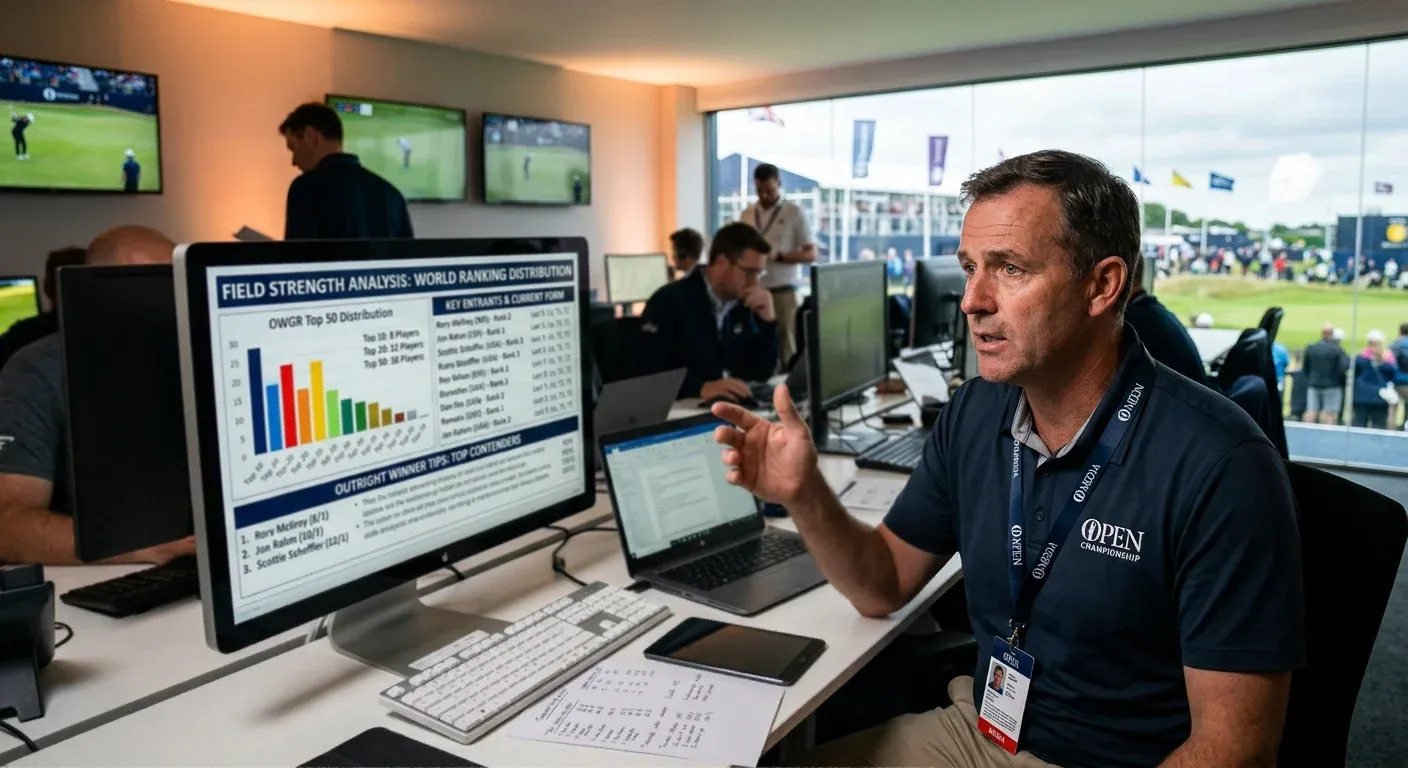
Each-way is the default for outright selections priced at 16/1 or more when terms are eight places or better. Win-only for anything shorter, unless there’s a specific reason the place component adds value. The complete guide to understanding when each-way structures optimise expected return — including worked calculations — is available in the guide to each-way golf betting tips.
Frequently Asked Questions
Should I take early prices on golf outright bets?
Generally yes, if you have a strong analytical conviction. Tuesday morning prices are longest and the market is freshest. Smart money flows in through Tuesday and Wednesday, shortening popular selections. The exception is if you're waiting for late-breaking information — injury updates, field changes, weather forecasts — that may strengthen or weaken your case. Information timing sometimes justifies later placement even at a shorter price.
How many outright bets should I place per tournament?
Three to five selections is the disciplined range. Fewer than three means you may be leaving legitimate value on the table from players who passed your research filters. More than five means your filters are too permissive and you're backing selections on insufficient conviction. Equal or proportional staking across your shortlist is more consistent than varying stakes based on subjective confidence within the group.
Is win-only or each-way outright better value in a 156-player field?
Each-way is generally better value in a 156-player field for players priced at 16/1 or longer, particularly when eight or more places are paid. The large field means the gap between win probability and place probability is wide — even a genuine contender has a much higher probability of finishing top-eight than of winning outright. That gap is what makes the each-way place component valuable at generous each-way terms.
Articles
Golf Betting Tips This Weekend
It's Wednesday afternoon and you've just remembered there's a golf event on this week. The market has been open since…
Golf In-Play Betting Tips
Saturday afternoon, final round of a DP World Tour event, and the lead changes hands five times between the 12th…
Golf Betting Unlicensed Sites
Someone in a golf betting forum I follow shared their "secret" for getting better odds: they'd found an offshore site…
Golf Betting Bankroll Management
The most painful lesson I've learned in golf betting has nothing to do with picking winners. I once had a…
